Studio note
At What Scale Are We Looking?
Why a cell can become a landscape, and a landscape can behave like a cell.
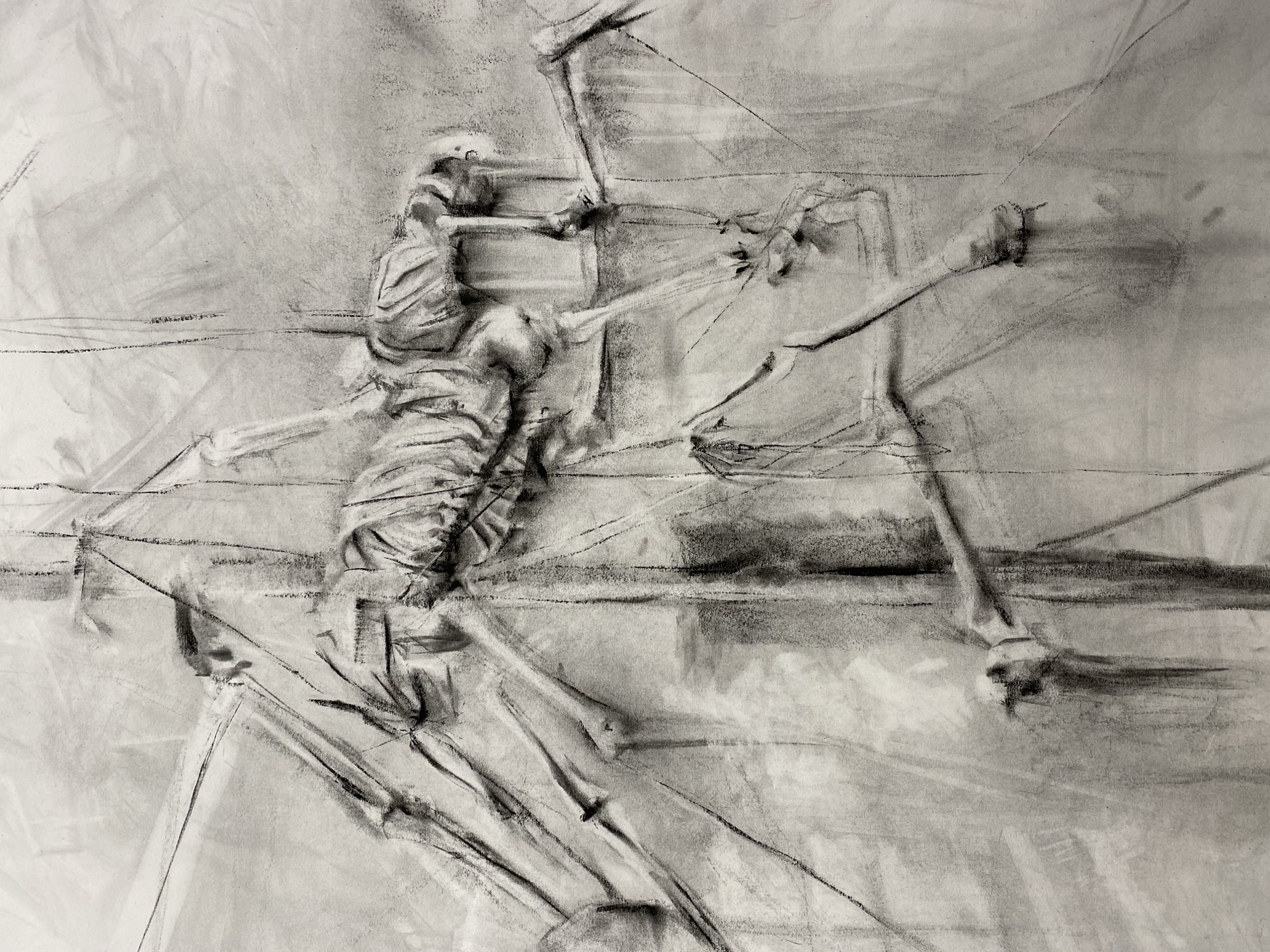
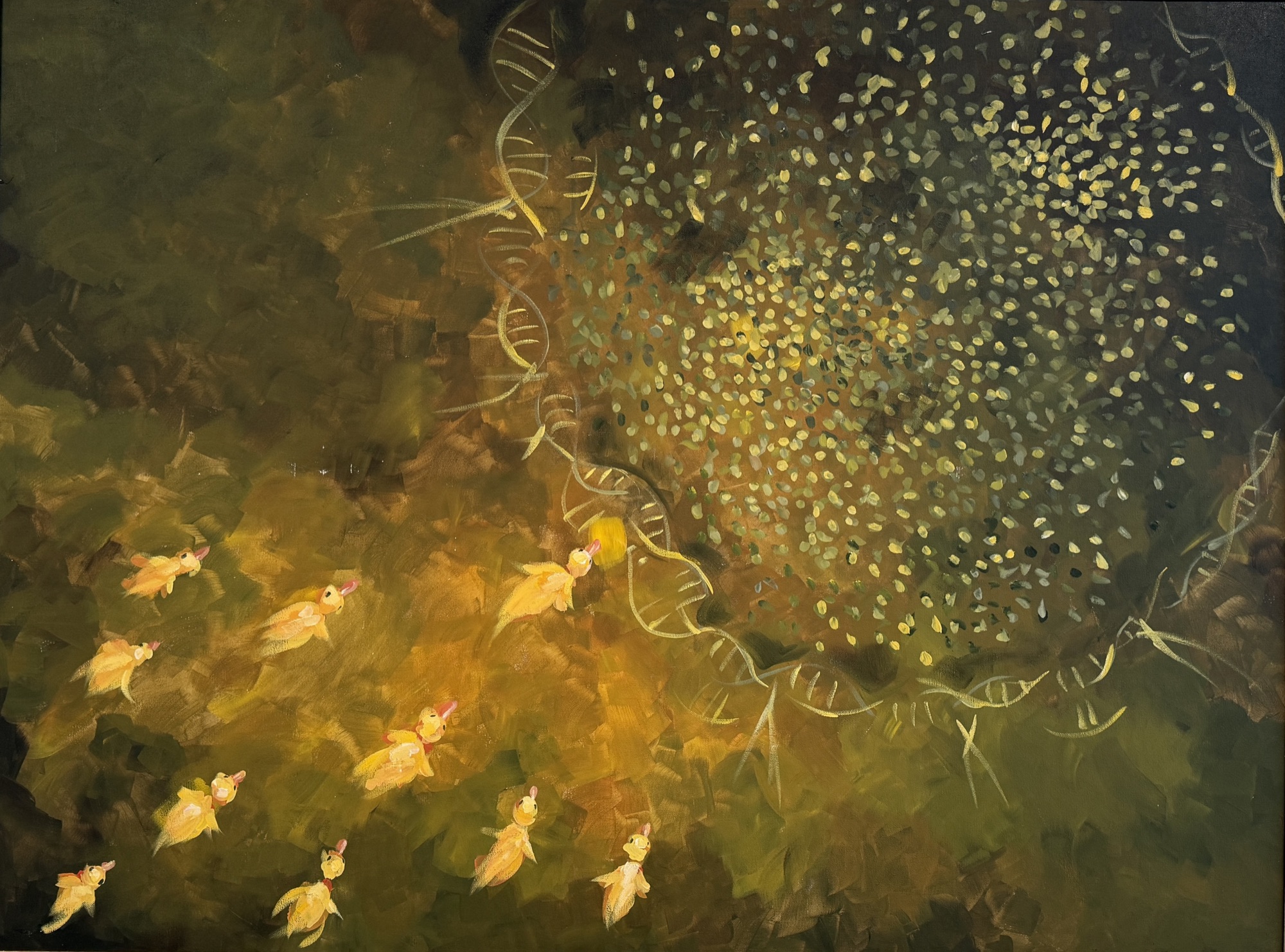
Scale in my paintings is deliberately unstable. A form can resemble a cell, a body, a tree, or a horizon, and the viewer's uncertainty becomes part of the work.
Scale is a way of changing attention
A microscope does not simply make something small look large. It changes what counts as an event. A boundary becomes active. A surface becomes inhabited. Movement that was imperceptible becomes the central drama of the image. I am interested in what happens when painting performs a similar shift without telling the viewer exactly where they have arrived.
The question I return to is simple: at what scale are we looking, and does it matter? In the studio, I do not try to resolve it. I use scale to keep the image unsettled. A cellular structure can open into a valley. A branch can resemble a neural pathway. A field of matter can look geological from one distance and bodily from another.
Cells and landscapes share problems
Cells and landscapes both organize flow. They contain passages, barriers, resources, pressures, and forms of communication. In plants, cell walls support individual cells while connections between cells allow materials and signals to pass. At a much larger scale, a landscape also directs movement through edges, corridors, elevations, and thresholds.
That resemblance gives me a compositional structure. In Organic Matter, forms accumulate and separate without settling into a single recognizable object. In Auxin Growth Factor, movement feels directed even though its source is not visible. Biological knowledge enters these works as a set of relationships, not as a label placed on top of the image.
Distance changes the painting
I want the paintings to reward more than one viewing distance. Across a room, a work may first read as a whole environment. Up close, brushwork interrupts that certainty. Edges reveal themselves as decisions. Color stops describing an object and becomes material laid down by a moving hand.
Ant on a Tree puts this instability directly into its title. The ant, the tree, and the imagined world around them depend on relative size. The painting does not offer a fixed camera position. It asks the viewer to move mentally between scales and to notice how quickly importance changes with perspective.
The image remains open
Surrealism gives me permission to keep these scales in contact. The work can be informed by observation without obeying ordinary proportion. It can borrow the logic of a cell and the feeling of a place. It can make a scientific structure intimate without reducing it to metaphor.
For me, the uncertainty is generous. A viewer does not need a biology background to enter the painting, and scientific knowledge does not cancel imaginative reading. The image can support both. What matters is the moment when looking becomes active: when a person stops asking what the painting is a picture of and begins wondering where they are.
Scientific references
These sources provide biological context for ideas discussed in the essay.
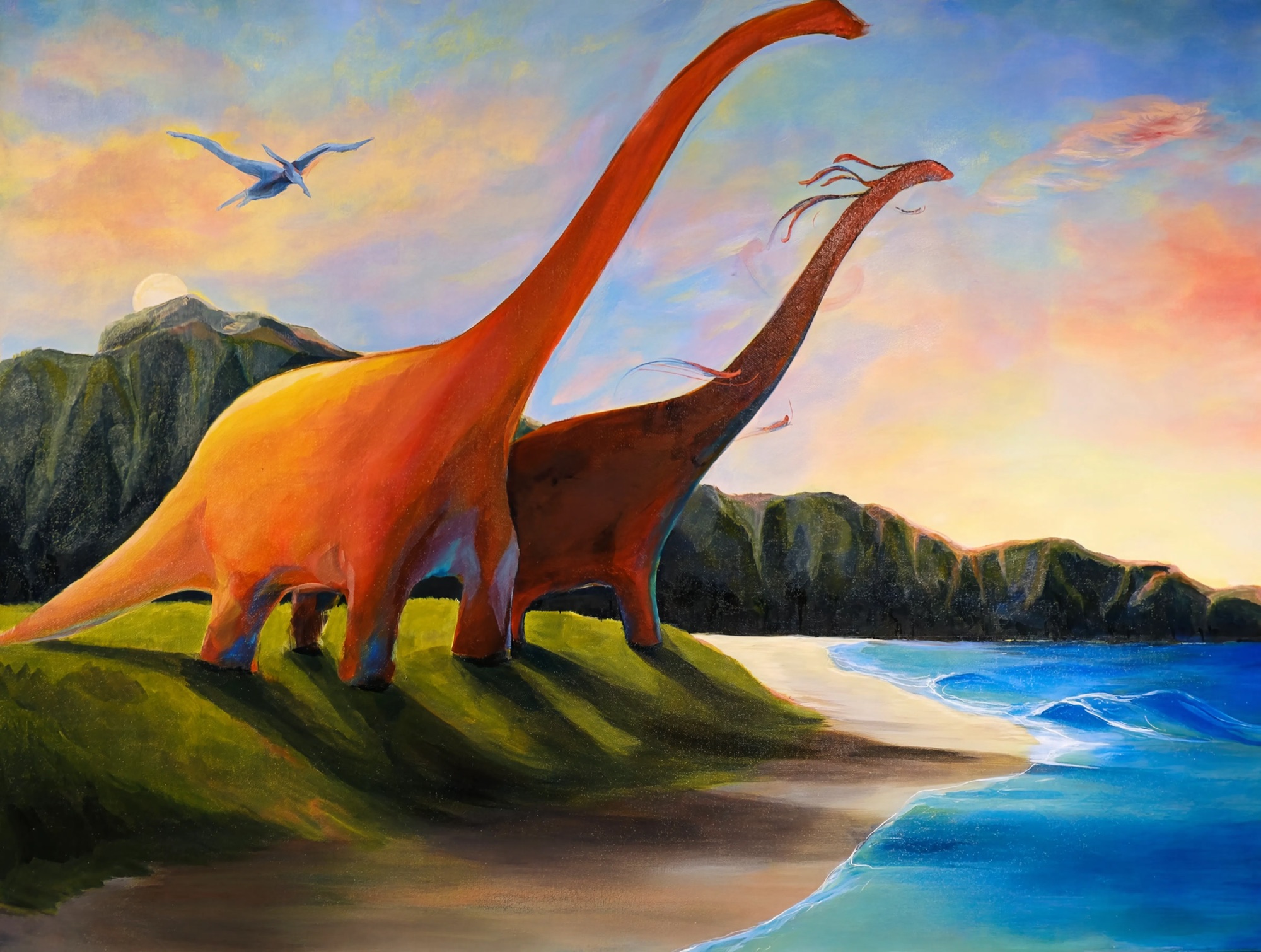
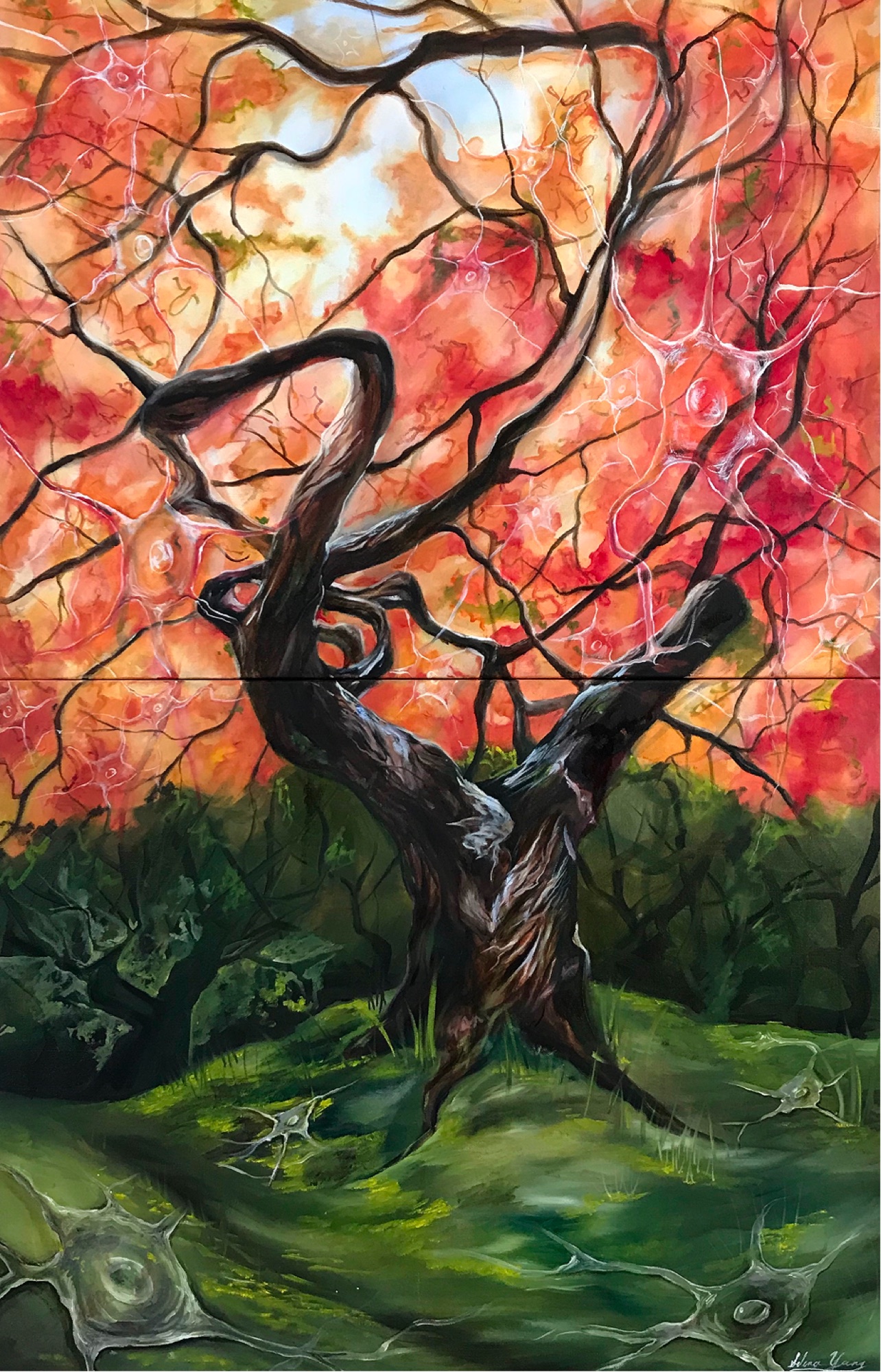
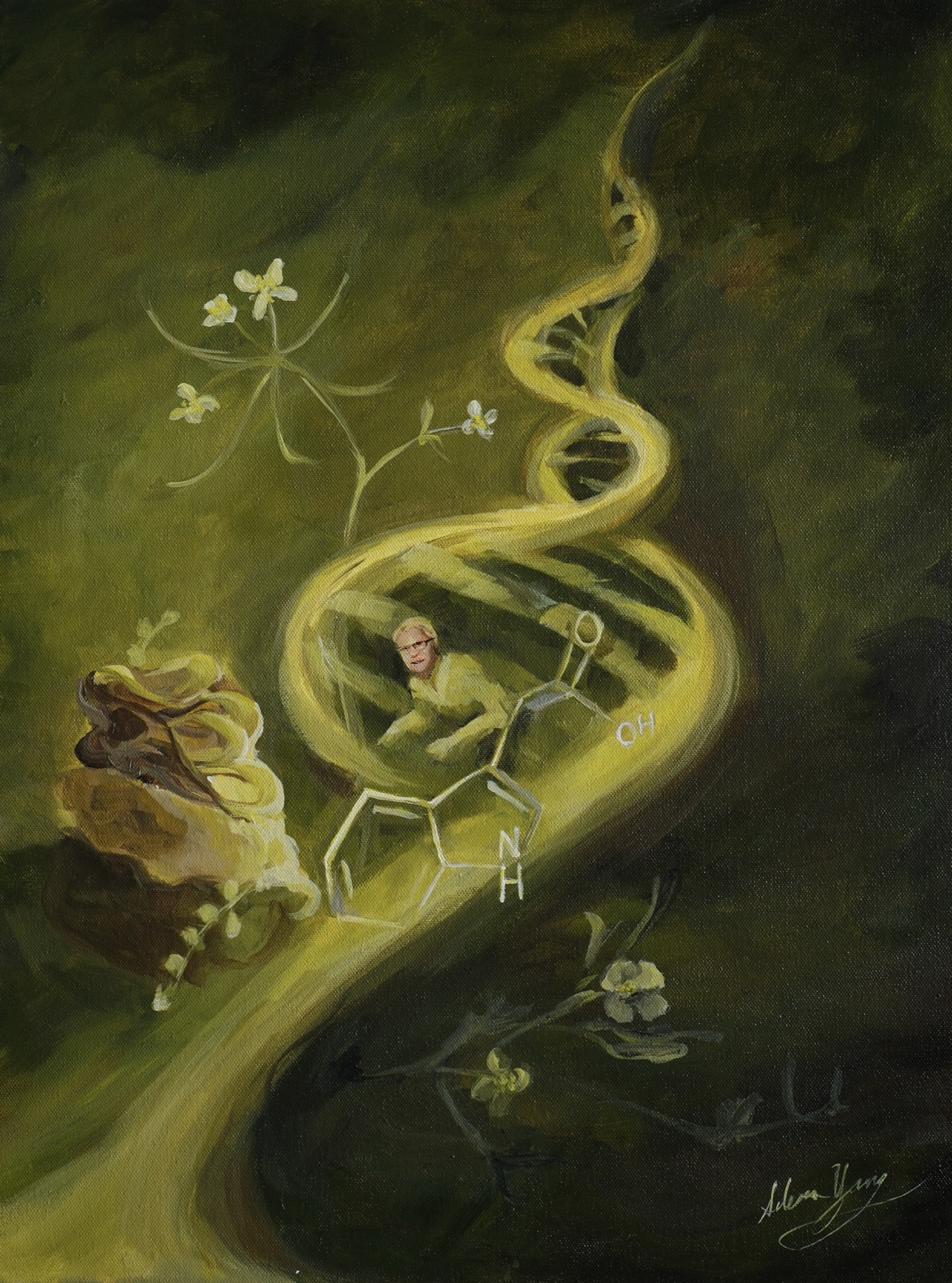
Painting the Code of Life
How molecular plant cell biology became the visual language of my surreal landscapes.
Painting With a Plant Cell Molecular Biologist
Notes on a father-daughter collaboration across art, science, and ways of seeing.