Studio note
Painting With a Plant Cell Molecular Biologist
Notes on a father-daughter collaboration across art, science, and ways of seeing.
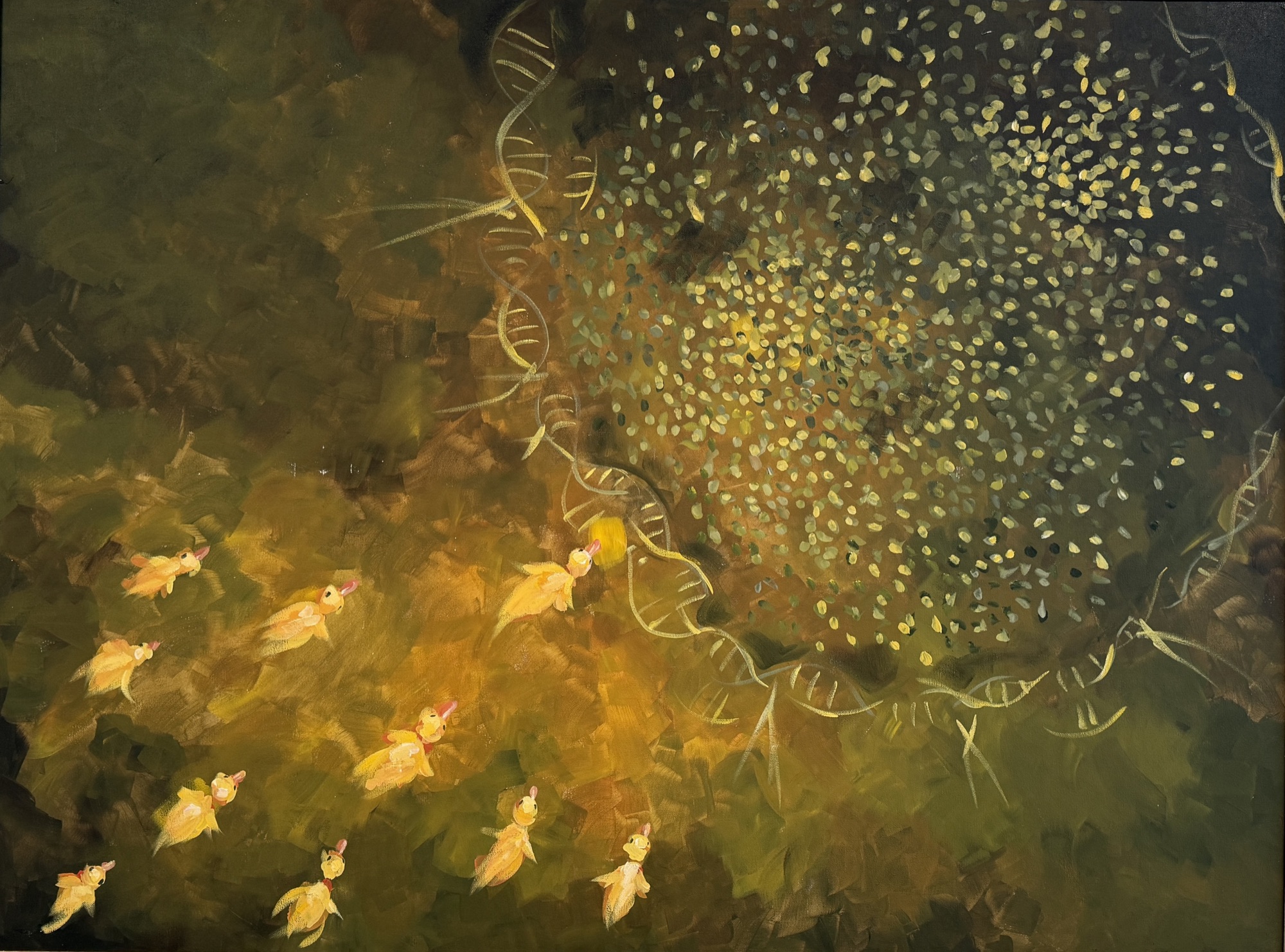
My collaboration with my father brings two forms of attention into the same practice. His field names how plant cells grow and communicate; painting tests how that knowledge can become spatial, emotional, and visible.
Two ways of seeing
My father is a plant cell molecular biologist. I am a painter. We can look at the same biological structure and ask different questions of it. He may begin with function, mechanism, or evidence. I may begin with weight, rhythm, color, and the sensation of moving through space.
The collaboration works because those approaches remain distinct. I am not trying to turn a scientific paper into an illustration, and he is not asked to make aesthetic decisions for me. Instead, scientific knowledge gives the work a deeper structure. Painting returns that structure in a form that can be encountered through the body and imagination.
Knowledge changes what becomes visible
Learning the name of a process can sharpen attention. Auxin is not just an abstract term once I understand its relationship to plant growth. A cell wall is not a static outline once I understand that strength, expansion, and exchange have to coexist. The more specific the knowledge becomes, the more strange and alive the visual world appears.
Auxin Growth Factor emerged from that kind of attention. The painting does not map a signaling pathway, but the idea of growth responding to information shapes its movement. CRISPR Duckweed holds a different tension: the tiny scale of duckweed beside the enormous implications of editing living material.
Preserving the gap between disciplines
The most productive part of an art-science collaboration is not agreement. It is the gap between what each discipline can do. Science can describe mechanisms with a precision that painting should not pretend to replace. Painting can hold contradiction, intuition, and emotional uncertainty without resolving them into a result.
That gap protects the work from becoming promotional or didactic. I want a viewer to sense that the paintings are informed by real biological thought, but I also want the image to exceed its reference. Organic Matter is allowed to be matter, terrain, organism, and abstraction at once.
A collaboration carried through a family
There is also a personal dimension that cannot be separated from the intellectual one. I was raised by a research scientist, so scientific practice was never an alien institution viewed from a distance. It was part of the atmosphere around me. As an adult, painting has become a way to return to that world with my own language.
Our collaboration makes room for inheritance without requiring imitation. I can appreciate the rigor of his field while making objects that operate differently. The work becomes a record of attention passing between generations: information becoming image, and image creating another reason to ask questions.
What I hope reaches the viewer
A viewer does not need to recognize a membrane, organelle, or growth signal for the collaboration to be present. It is already there in the painting's internal logic: in how forms contain one another, how boundaries open, and how movement seems to travel through a living terrain.
I hope the work makes scientific knowledge feel near without making it smaller. The hidden code of life is not a remote spectacle. It is active in every plant, every landscape, and every body looking at the painting.
Scientific references
These sources provide biological context for ideas discussed in the essay.
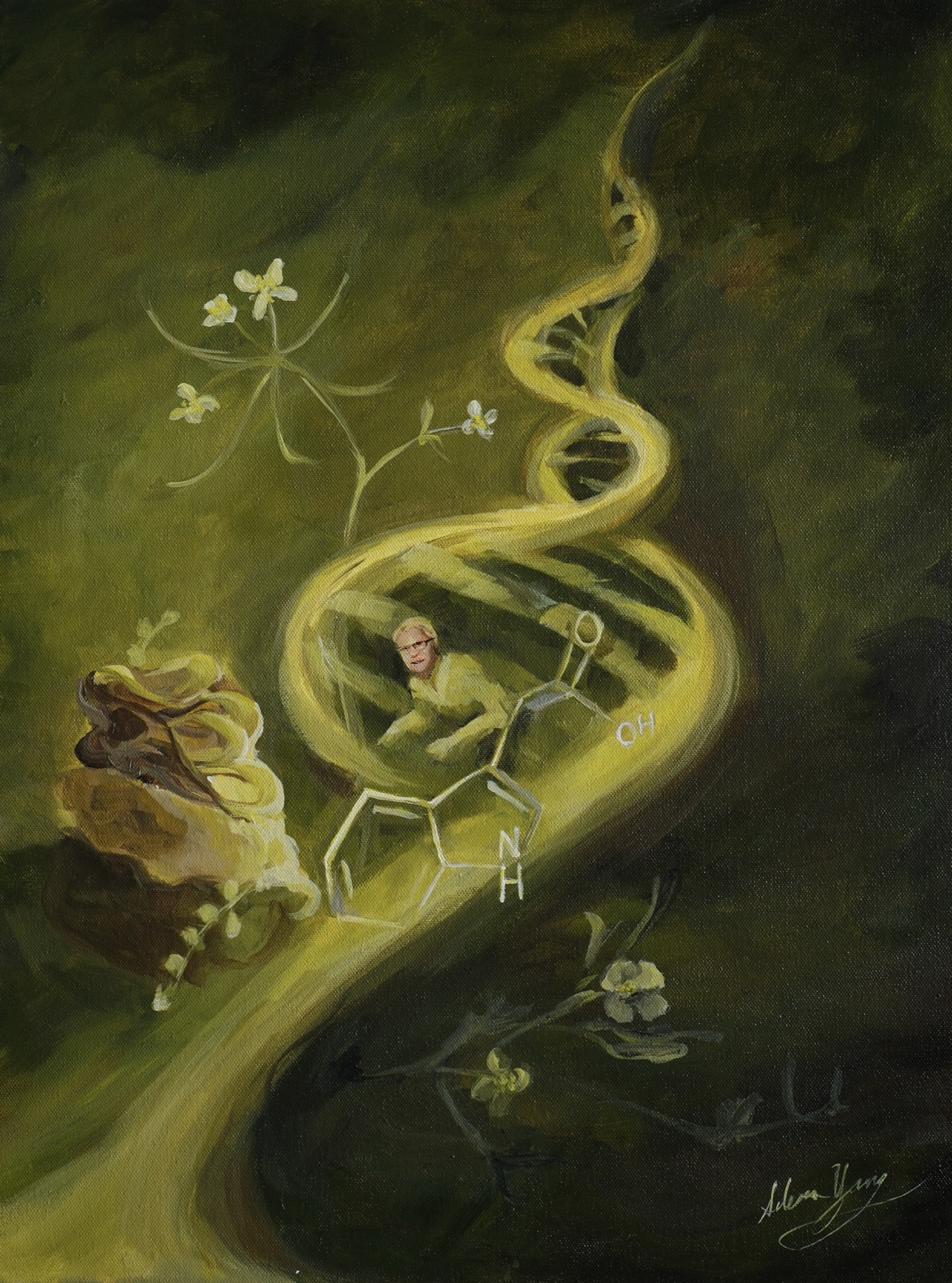
Painting the Code of Life
How molecular plant cell biology became the visual language of my surreal landscapes.
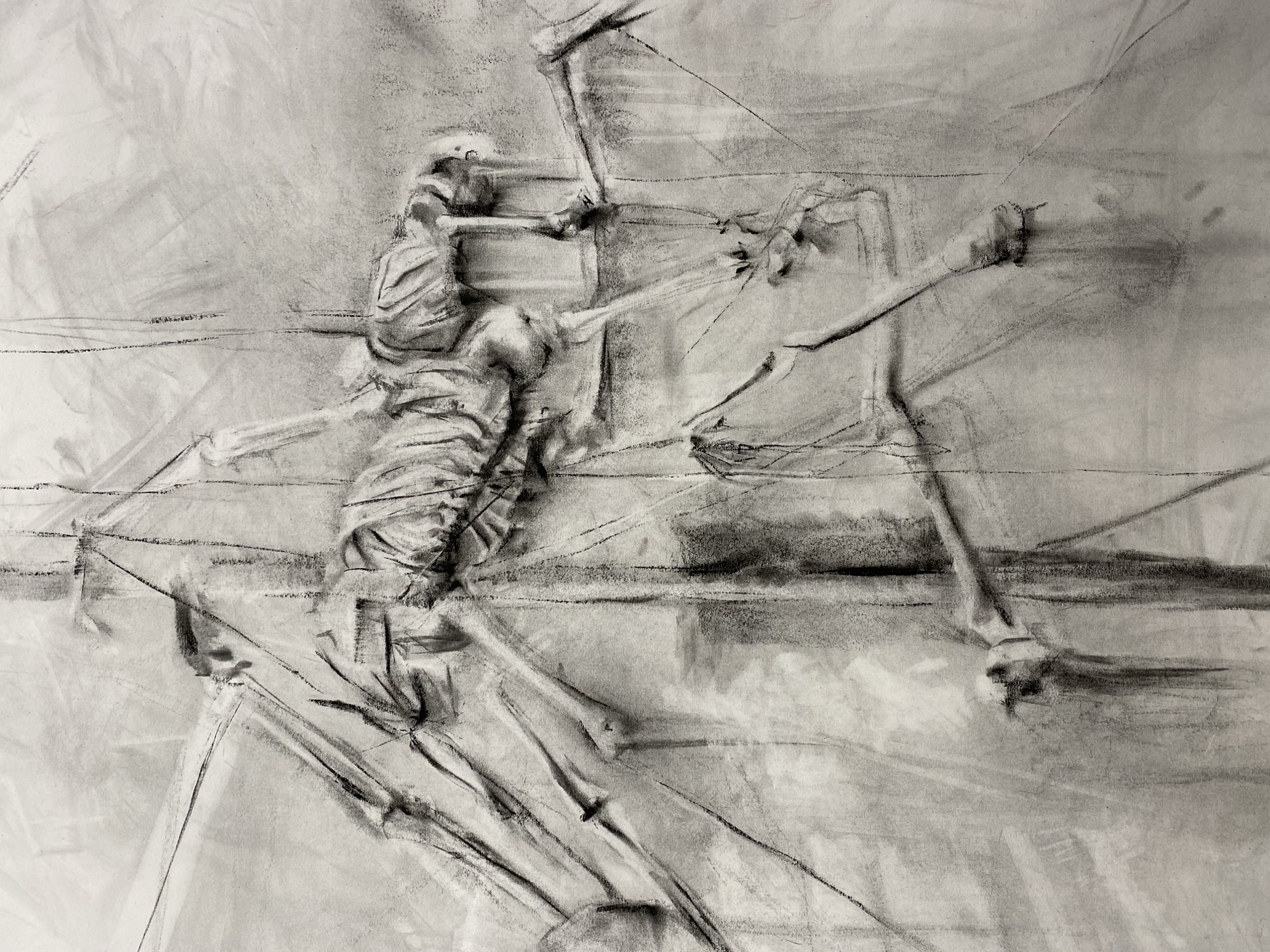
At What Scale Are We Looking?
Why a cell can become a landscape, and a landscape can behave like a cell.