Studio note
How to Look at a Surreal Biological Landscape
A slow-looking guide to scale, structure, movement, and the living systems inside the paintings.
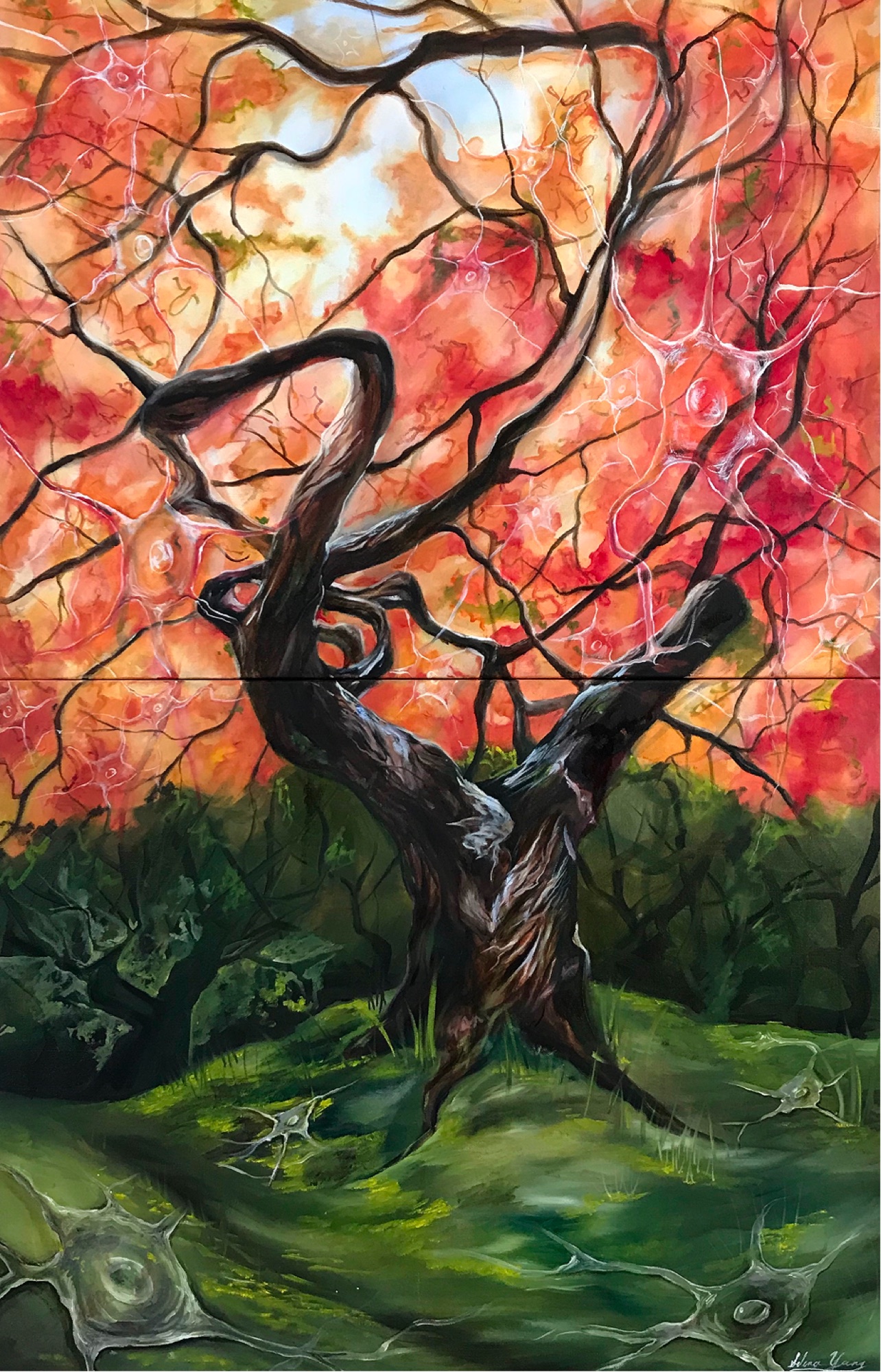
Begin with the painting as a physical object, then follow one boundary, notice where scale changes, and let the title arrive late. There is no single code to crack; the goal is to make your own looking more precise.
Begin with the physical fact
Before deciding what an image represents, notice that it is paint on a surface. Look for a thick edge, a thin wash, a color laid over another color, or a place where the brush changed direction. These are traces of time and movement. They tell you how the painting was built before they tell you what it depicts.
This matters because a surreal image can make viewers rush toward interpretation. The physical surface slows that impulse. It reminds us that every imagined world began with a hand moving across canvas.
Follow one boundary
Choose a single edge and let your eye follow it. Does it enclose a form, divide two spaces, or dissolve before it reaches a conclusion? In paintings informed by cellular biology, boundaries rarely function as simple outlines. A membrane or cell wall separates, but it also participates in exchange and growth.
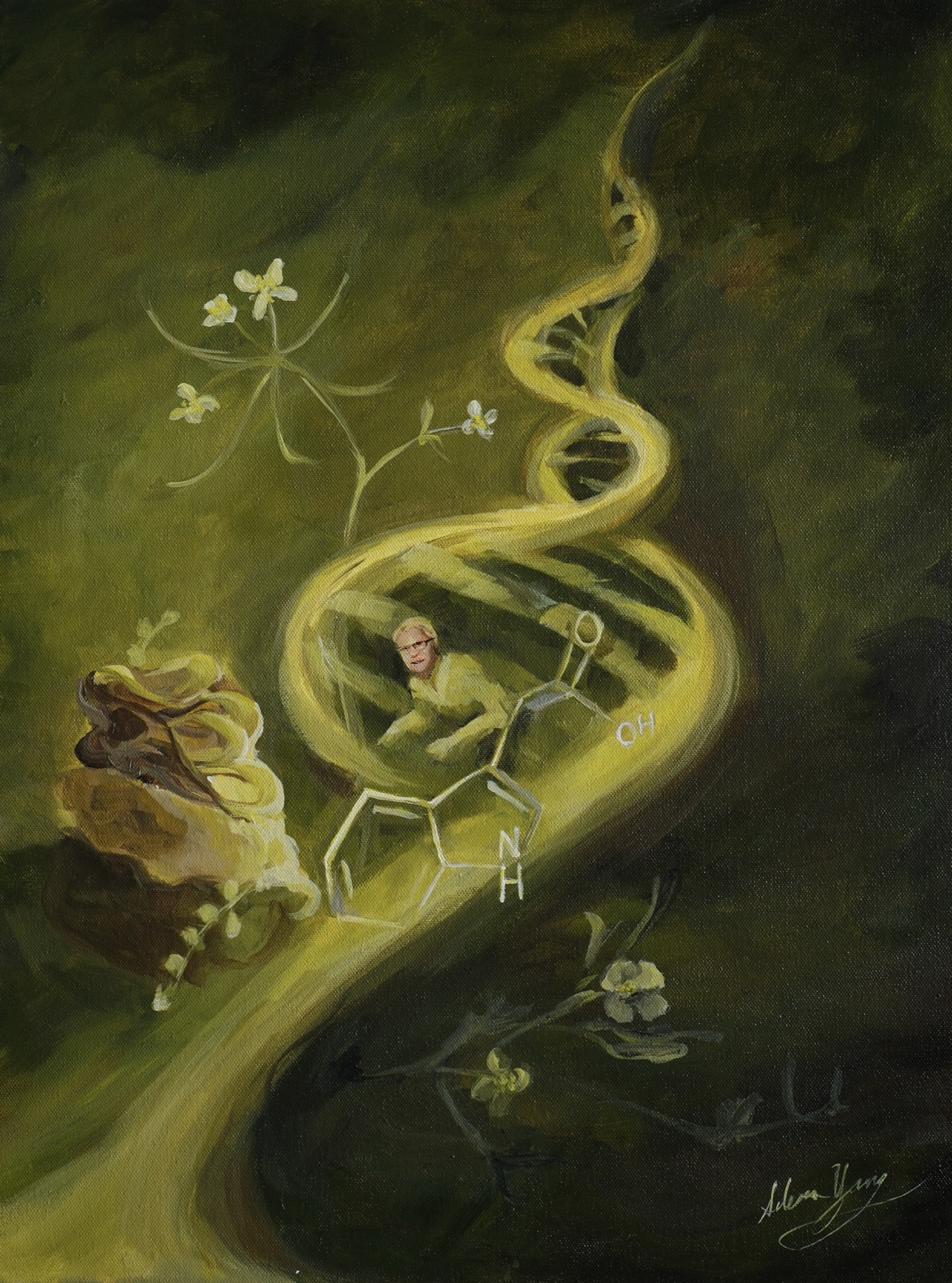
You can see this tension in Auxin Growth Factor. Some forms feel contained while the larger composition keeps moving. The eye alternates between an individual structure and the system carrying it.
Let the scale change
Ask yourself how large the pictured world might be. Then deliberately change the answer. If it first looks microscopic, imagine it at the scale of architecture. If it looks like a landscape, imagine that it exists inside a cell. Notice what becomes more important each time.
Neuron Tree invites this kind of movement. Branching can belong to a tree, a nervous system, a river, or a history of growth. The painting does not need to choose only one.
Track movement instead of objects
If naming the objects becomes difficult, follow the direction of energy. Where does the image accelerate? Where does it collect, repeat, or pause? Color and rhythm can create a path even when the forms remain unfamiliar.
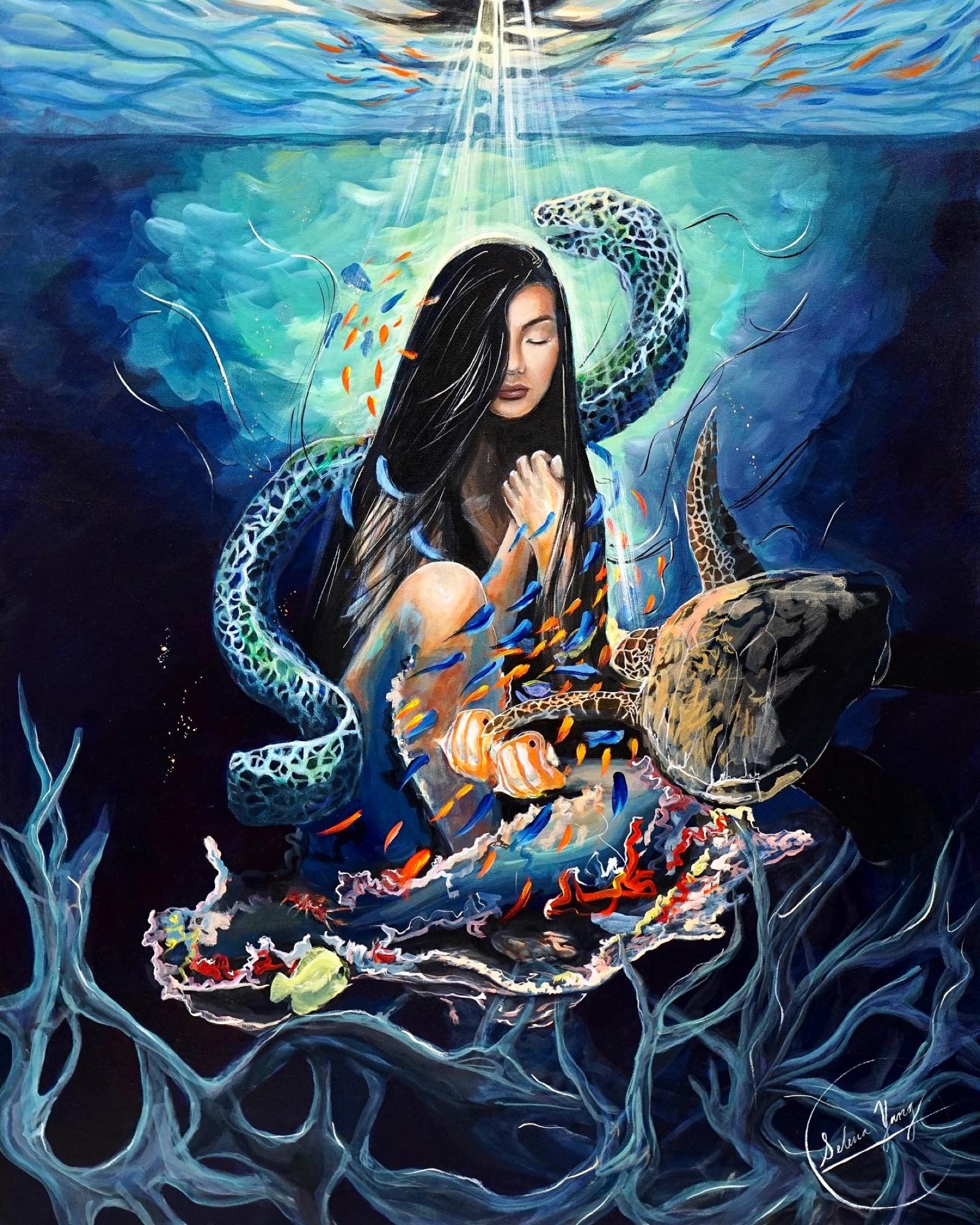
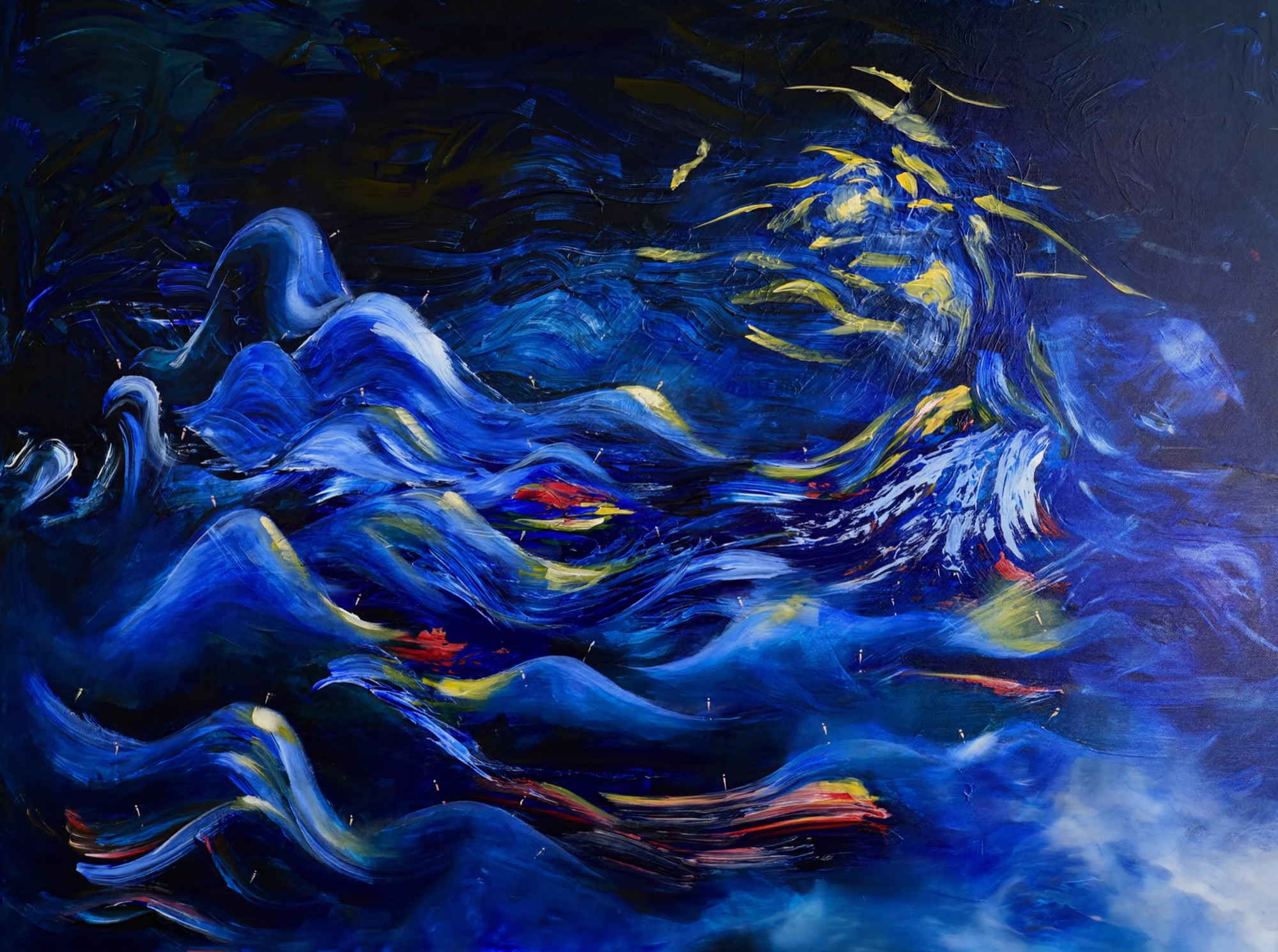
In Bouncy Waters, movement is part of the imagined premise. In The Last Coral Reef, the eye moves through an ecosystem whose beauty and vulnerability cannot be cleanly separated. Tracking movement keeps the image alive longer than identifying a fixed subject.
Read the title late
Titles matter, but they do not need to be the first instruction. Spend time with the image before reading the label. Form an initial sense of place, scale, and mood. Then let the title alter what you thought you saw.
A title can introduce scientific context, a remembered conversation, or a specific location. The productive moment is the difference between your first reading and the one that follows. The title does not correct the viewer; it adds another layer.
There is no single correct interpretation
Slow looking is not a test of whether you know enough. A biology background may reveal one set of relationships. A painter may notice construction. A child may enter the image as a world with its own story. Those readings can coexist if they stay attentive to what is actually present.
The most useful question is not 'What does this mean?' but 'What is this painting making me notice?' That question can be answered more than once, and differently each time you return.
Painting the Code of Life
How molecular plant cell biology became the visual language of my surreal landscapes.
At What Scale Are We Looking?
Why a cell can become a landscape, and a landscape can behave like a cell.