Studio note
Listening to San Francisco
How overheard conversations at Ocean Beach, the Embarcadero, and the Mission become painted worlds.
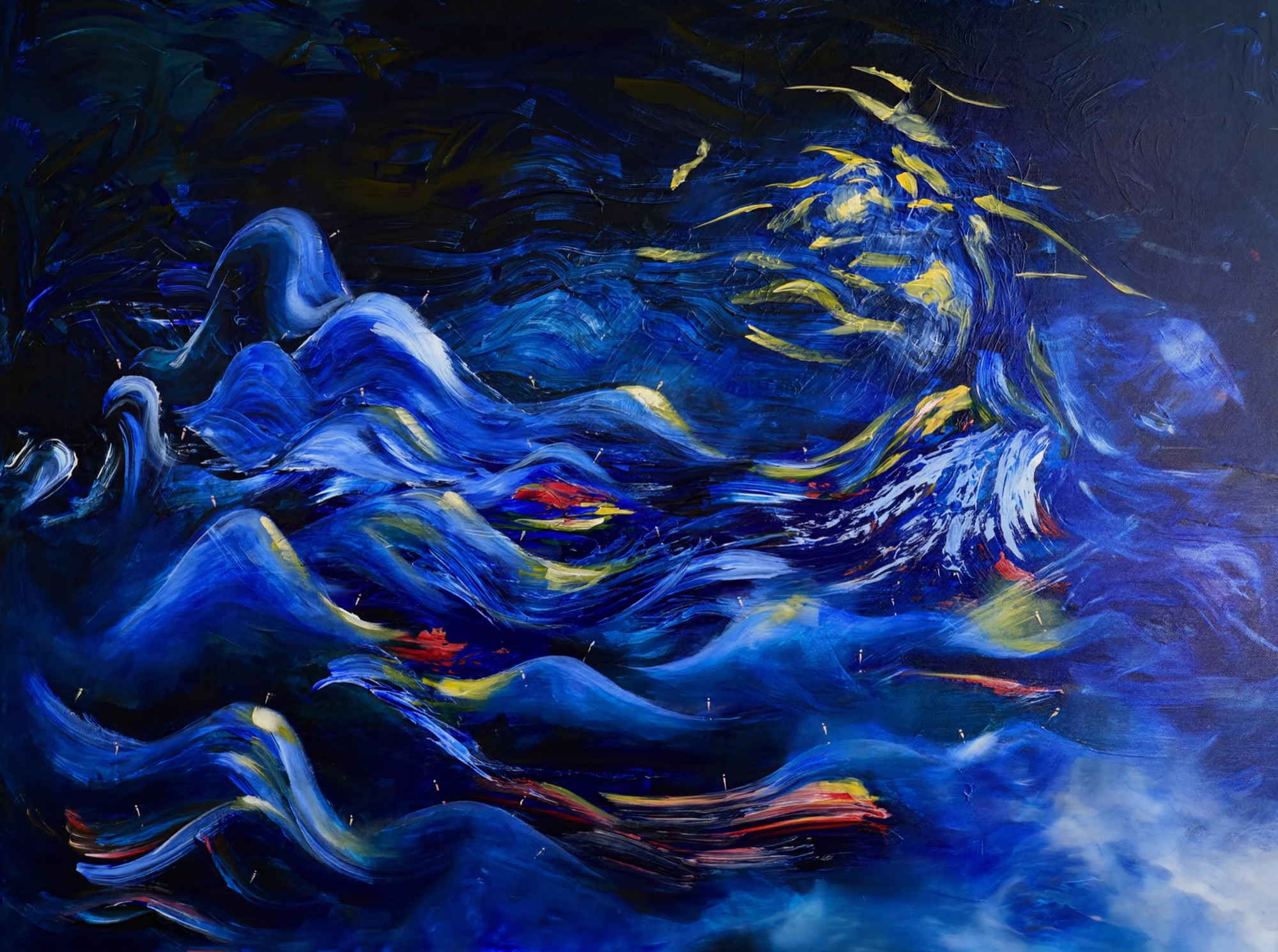
The Bouncy Waters paintings begin with language overheard in San Francisco. A passing sentence becomes a compact proposal for another world, and painting gives that proposal space, color, and scale.
Ordinary speech can open an impossible place
A city is full of unfinished stories. Most pass quickly: a sentence on a sidewalk, an exchange at the edge of the water, a question spoken before someone turns a corner. I am interested in the fragments that change the atmosphere around them. They do not explain a whole narrative. They make a small opening through which another reality becomes possible.
The Bouncy Waters paintings grow from that kind of listening. Unlike the Organic Utopia works, which begin in the visual language of biology, these paintings often begin with a line of speech. The process is still about world-building. A conversation becomes a rule, and the painting asks what kind of place could live by it.
Ocean Beach: drawing a cake together
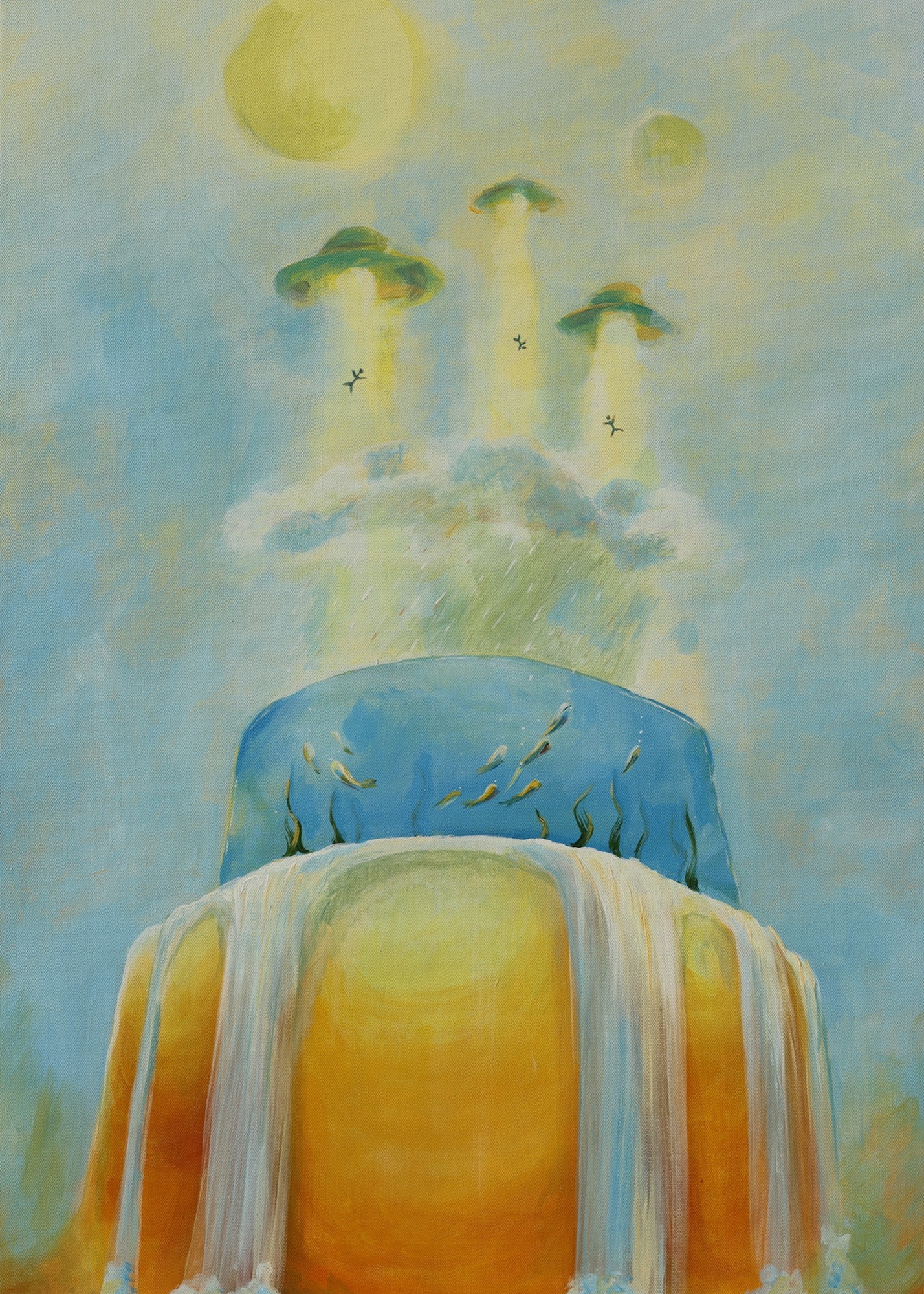
Baking a Cake on the Beach began with a sentence overheard near Ocean Beach outside the San Francisco Zoo in October 2024: 'Let's bake a cake. I draw a layer, and then you draw a layer. I'll go first.'
I love how easily the speaker moves between making, drawing, and baking. A cake becomes an image, and an image becomes something built in layers by more than one person. The painting keeps that logic rather than illustrating a literal beach scene. Its world is assembled through accumulation, cooperation, and imaginative permission.
The Embarcadero: what if the world was bouncy?
Bouncy Waters began with an exchange at the Embarcadero in September 2024: 'What if the world was bouncy?' Another voice answered, 'Bouncy like water?' The thought continued: 'What if we jumped around to get to places?'
The conversation changes movement before it changes appearance. Streets, water, and distance would all behave differently in a world where jumping is transportation. That is a useful instruction for painting. Instead of depicting a fantasy object, I can rebuild the physics of the whole image. Forms rebound, spaces stretch, and the viewer's body starts to imagine moving through the scene.
The Mission: place as a double meaning
Mission in the Mission holds the name of a San Francisco neighborhood and the idea of an intention carried through it. The repetition makes the familiar place slightly unstable. Is the mission a destination, a task, a history, or a private purpose moving through public space?
Painting from a city does not always mean painting its recognizable landmarks. Sometimes the more faithful record is a shift in language, pace, or attention. San Francisco enters these works through the way people imagine aloud within it.
Listening and biology are not separate practices
The two bodies of work begin differently, but they meet in their interest in systems. A biological system proposes relationships between living structures. An overheard sentence proposes relationships between people, materials, and possibilities. Both can contain instructions for a world.
Listening also changes scale. A passing remark that might disappear in seconds can become a painting that takes time to make and time to encounter. The work gives the fragment weight without pretending to complete the lives around it. It preserves the invitation: for a moment, imagine that the world could work this way.
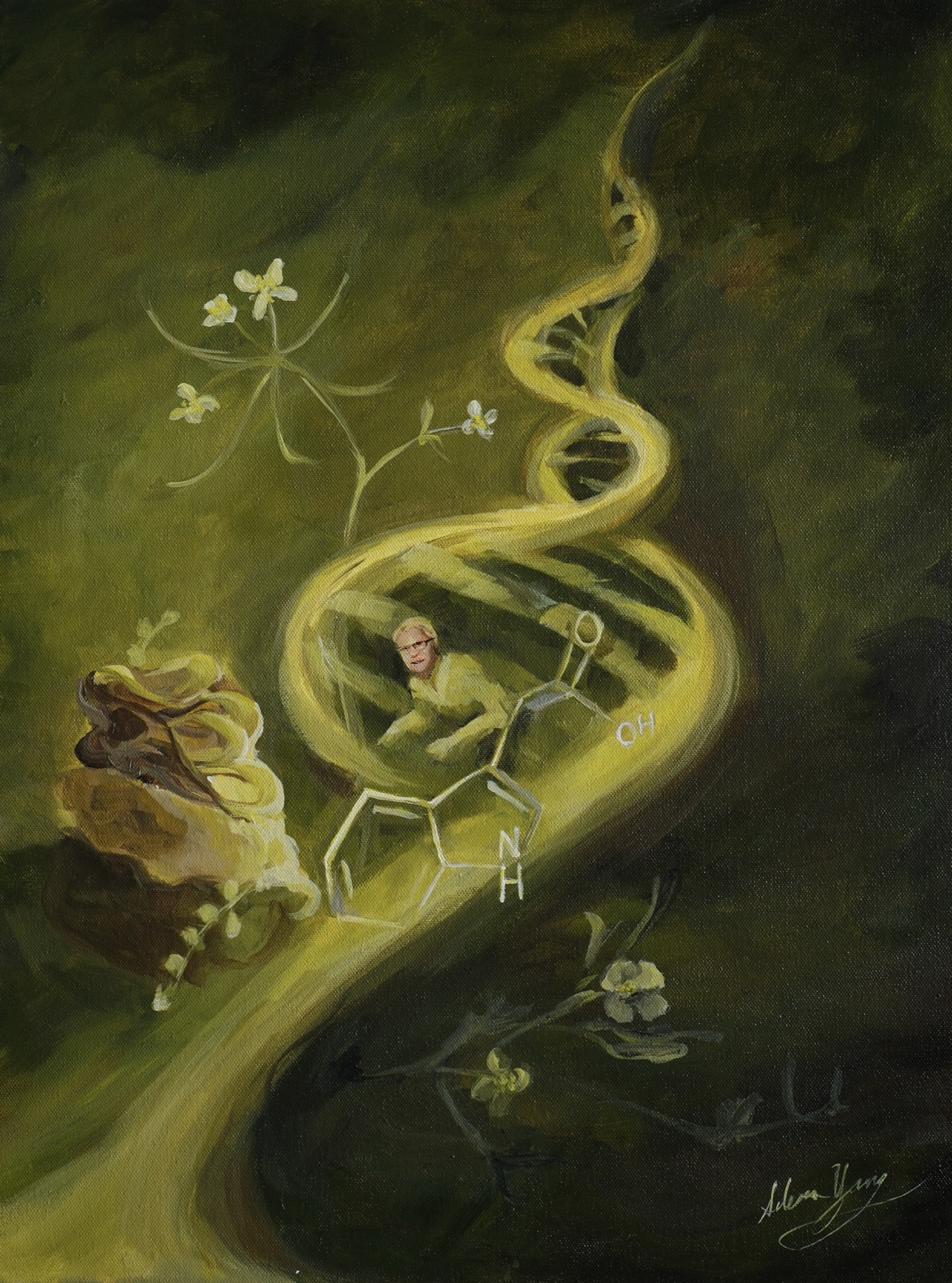
Painting the Code of Life
How molecular plant cell biology became the visual language of my surreal landscapes.
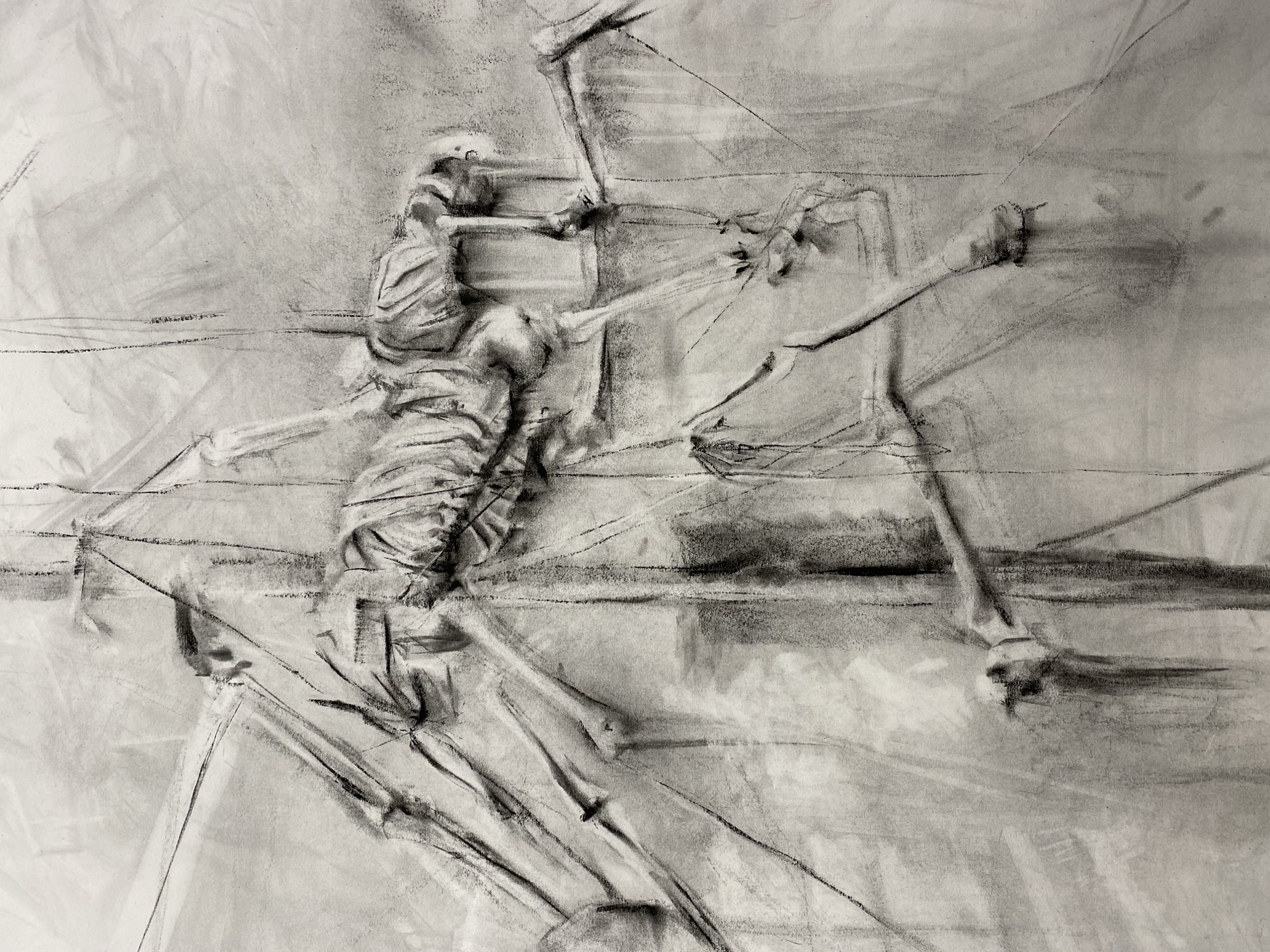
At What Scale Are We Looking?
Why a cell can become a landscape, and a landscape can behave like a cell.